Tips for Group Joining Trekking in Nepal
If you are looking to join group for treks in Nepal, it’s important to book early to secure your spot, especially during peak seasons when availability is limited. Booking in advance not only ensures your place in a group but also provides flexibility for your vacation time.
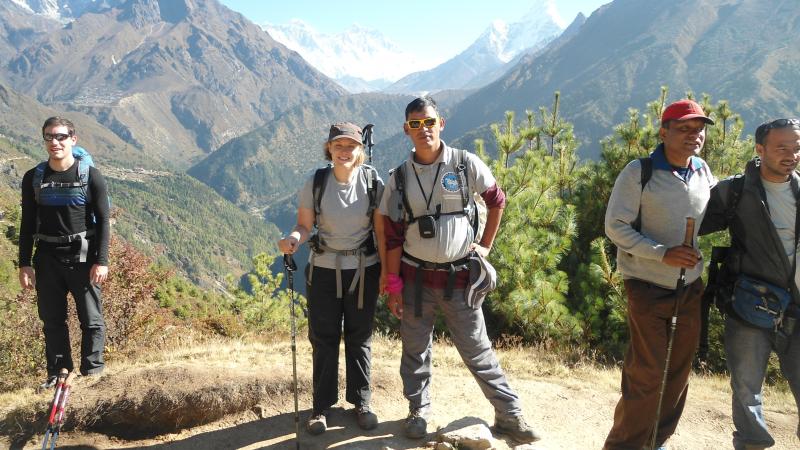
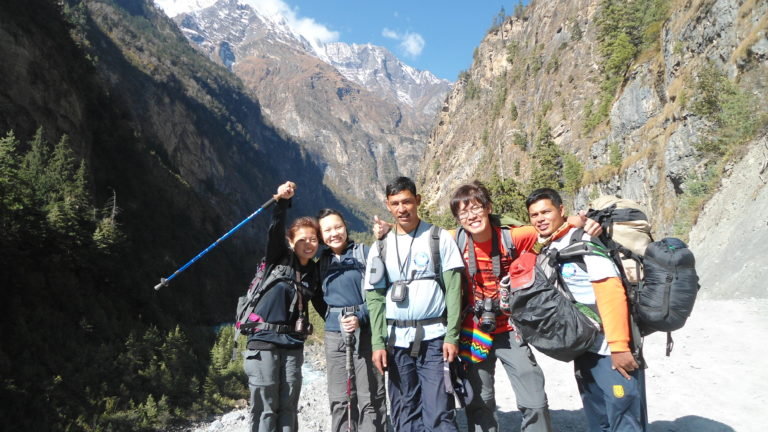
For trekking with a group, it is necessary to stay flexible. Typically, a group consists of 8 to 10 people, and you will need to follow group rules such as staying together, visiting together, walking together, and eating together. Additionally, ensure you are physically fit to keep up with the group’s pace. If you prefer to do things independently, it may be difficult for the guide to manage. If you are not comfortable with group dynamics, you may need to book a private trip.
Normally, the group joining trekking itinerary will be fixed and provided by our experienced team. Therefore, you should go through the itinerary thoroughly before booking to ensure it fits your fitness level and trekking experience. Be aware of the daily distances, elevations, and acclimatization days, especially if you are trekking in high-altitude regions like Everest, Manaslu, Langtang, or Annapurna. If you want to extend or customize your trip, please discuss it with us in advance.
How to join a trekking group in Nepal?
If you are traveling alone and planning to join a trek in Nepal with a group, here is some information on how to join a trekking group in Nepal
We offers several trekking routes, from the famous Everest Base Camp trek to the Manaslu Circuit Trek and many more. First, research the trek route and decide which trek suits your preferences and fitness level. Then, look for the best local trekking agency that is reputable and well-reviewed, with experienced guides and a strong safety record.
After finding the reputable trekking agency, get in touch with them. You can contact them through their websites, emails, Viber, WhatsApp or phone numbers. Inquire about the trek you're interested in, departure dates, group size, cost, inclusions, and any other details you need to know.
After your inquiry, the trekking agency provides you with all information about the trip such as fixed departure date, number of groups, cost, service and all your requirements.
Once you're satisfied with a particular trekking company and their itinerary, cost, service, confirm your booking by making a deposit or payment as required.
Joining a trekking group in Nepal will be a wonderful way to explore the surprising landscapes and cultures of the region while also ensuring safety and friendship along the way.
About Diamox — a medicine for high altitude sickness
Diamox is the brand name for Acetazolamide, a medicine that helps prevent and treat altitude sickness (Acute Mountain Sickness, AMS). When trekkers ascend to higher elevations, oxygen levels decrease. Taking Diamox helps your body adjust faster to high altitudes by stimulating deeper and faster breathing, allowing you to take in more oxygen. Diamox works by making your blood more acidic, which signals your body to breathe faster at high elevations. This helps reduce symptoms such as headaches, nausea, and dizziness.
Based on our experience and advice from our altitude doctor, if trekkers have previous high-altitude trekking experience (around 4,000 to 5,000 meters) in Nepal, there is usually no need to take Diamox. However, if trekkers are trekking at these altitudes for the first time, it is recommended to start taking half a tablet of Diamox from the first day of the hike.
For example, all trekking route in Nepal, where the maximum elevation is 4,500 to 5500 meters, it is advisable to start taking Diamox from the first day of the trek. After taking Diamox, some people may experience side effects such as tingling sensations in the skin. Therefore, it is important to drink at least 4 liters of water per day while trekking and taking Diamox.
Important Notes
- Diamox is not a cure — it just helps prevent or lessen AMS.
- Stay hydrated — Diamox acts as a diuretic (you'll pee more!).
- Common side effects: Tingling in fingers, frequent urination, slight taste changes.
- Always ascend slowly, even with Diamox.
- Never use Diamox as an excuse to climb too fast!
Trekking Gear List
Travel equipment are necessary to pack before you travel. We hope it is too much to carry from your home to others country but some are the necessary equipment can be hired or buy in Kathmandu around Thamel. These general equipment are for all seasons while on trekking in Nepal, but may be different as per the different season and duration of trekking routes on your chosen trip.
Documents:
- Passport and 4 passport size photos
- Travel insurance details (in case an emergency evacuation if needed)
- Boarding passes for flights
- Driver’s license (if needed)
- Cash USD
- Credit/Debit Card (Ensure you have $500 on your card incase an emergency helicopter evacuation is needed)
Sleeping:
- Sleeping bag (Comfort rating -15 Celsius recommended)
- Sleeping bag liner (Optional)
Footwear:
- Trekking boots: one pair lightweight
- Sandals for city and tea house footwear
- Shoes for the plane and tea houses (Optional)
- Gaiters for hiking in winter to the base camp
- Thin, lightweight inner socks
- Thick, warm wool hiking socks
Clothing for Body:
Please make sure that you have non-cotton clothing for trekking:
- Base-layer t-shirts (e.g. running t-shirts)
- Fleece/Windproof jacket
- Waterproof jacket
- Down jacket for warmth
- Travel clothes and City Wear
- Underwear
- Base-layer trousers (optional)
- Waterproof trousers
- Trekking trousers
- Trekking shorts (Optional)
- Gloves and wool hat
- bandanna or scarf
Health Requirements (Basic First Aid Kit)
- First-aid kit; should contain lip salve, Aspirin, Band Aids, anti-histamine, Imodium or similar tablets for mild cases of diarrhea
- Re-hydration powder, extra prescription drugs you may be taking if any particular
- Wet wipes for cleaning can be purchased in Kathmandu
Others:
- Sunglasses and Sun cream
- Towel
- Book (reading and writing materials)
- MP-3 /Music, headphones and ear plug (who know some people on group are snoring) as optional.
- Travel wash
- Hand sanitizer, wet wipes
- A day bag: 35 liters
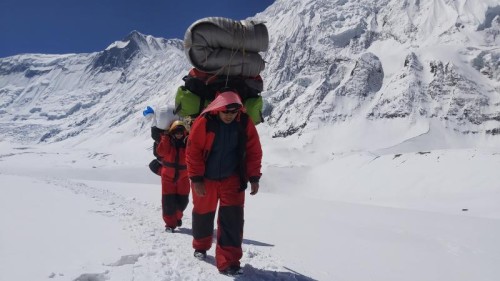
- A duffel or rucksack with straps to go over your back (Max 12 kg of weight for porters to carry)
- Dry Liner or Dry Bag
- Water bottle/thermos/ camel bag: At least 2 L. Nalgen bottles best.
General Toiletries
- Toilet papers/ tissue
- Contact lenses, Glasses (if needed)
- 1 medium sized quick drying towel
- Tooth brush/paste (preferably biodegradable)
- Multipurpose soaps (preferably biodegradable)
- Nail clippers
- Face and body moisturizer
- Feminine hygiene products
- Small mirror
- On Personal Hygiene
- Wet wipes (baby wipes)
- Anti-bacterial hands wash
Others (optional)
- Trekking Poles
- Large plastic bags – for keeping items dry inside your kit / duffel bag
- Travel game i.e. chess, backgammon, and scrabble. (for luxuries)
- Binoculars (for luxuries)
- Trail Map/Guide book (if you are alone)
High altitude sickness information
Mountain sickness is another name for high altitude sickness. You must be aware of high altitude sickness symptoms since they arise rapidly if you hike or ascend to a higher elevation. Here are some details if you're curious as to why it occurs. The air pressure is the main cause of altitude sickness. Your body needs time to adapt to the shift in air pressure when you travel to higher elevations since the air pressure decreases and there is less oxygen present. According to doctors, if you are at sea level, it begins (high altitude sickness) at 8,000 feet (2400 meters).
1) Types of High Altitude Sickness
There are three types of altitude sickness:
- Acute Mountain Sickness (AMS):It is very common and symptoms feel like a tiredness, dizzy, headache, thirsty, muscle aches, nausea
- High Altitude Pulmonary Edema (HAPE):It is effect in the lungs, which can be very dangerous and hard to do life threatening
- High Altitude Cerebral Edema (HACE):It is effective in the brain and most difficult to treat and you need to go to hospital attention the right way.
2) Cause of High Altitude Sickness
Following are the causes of high altitude sickness:
- Generally living near sea level and travel to a high elevation
- Had the sickness before
- Climbing quickly
- Not being acclimatized to the altitude
- Drinking alcohol when you ascend
- Medical problems of heart, nervous or lungs
3) Symptoms of High Altitude Sickness
These symptoms will appear depending on your speed to climb and how hard you push. Symptoms range from normal to serious. They can affect the nervous system, lungs, muscles, and heart.
Here are symptoms of High Altitude Sickness:
- Difficulty sleeping
- Dizziness
- Fatigue
- Headache
- Loss of appetite
- Nausea or vomiting
- Rapid Pulse (Heart Rate)
- Short breath with action
- Blue color of skin or gray soft skin
- Chest tightness or blocking
- Confusion
- Dry cough or coughing with blood
- Cannot walk in a straight line
4) Prevention for High Altitude Sickness
Important keys to preventing of High Altitude Sickness are:
- Climb the mountain gradually.
- Stop every 2,000 feet (600 meters) of climb above 8,000 feet (2,400 meters) and one or two nights sleep there.
- Sleep at a lower altitude when possible.
- Make sure that you have the ability to quickly descend if needed.
- Learn how to recognize early symptoms of mountain sickness.
- If you plan on climbing quickly, or climbing to a high altitude, ask your provider about medicines that may help.
- If you are at risk for a low red blood cell count (anemia), ask your provider if your planned trip is safe. Also ask if an iron supplement is right for you. Anemia lowers the amount of oxygen in your blood. This makes you more likely to have mountain sickness.
5) While climbing, you should follow these rules:
- Drink plenty of water
- Climb slowly.
- Take it easy
- Do not drink alcohol.
- Eat regular meals that are high in carbohydrates.
- Sleep lower elevation
- Take a medication (diomax) according to doctor