High Pass Adventure Pvt. Ltd.
tripadvisor logo
Regd No: 161083/073TREKKING, CLIMBING, BIKING & ADVENTURE
10Years Excellence

Recommended

tripadvisor logo

Nar Phu Valley Trek

15 DaysBased On 1 Review
Nar Phu Valley Trek

Overview

Trip Facts

  • Trip Duration15 Days
  • Max Elevation5,416 m
  • Best MonthSep - Nov & Mar - May
  • Walking hours Per Day5 - 8 Hours
  • Trip GradeModerately to Challenging
  • MealsBLD
  • AccommodationHotel/Lodge
  • Group Size2+
  • DestinationAnnapurna Region

Experience the Nar Phu Valley Trek at least once in your lifetime and explore Nepal’s remote, untouched valleys. This unique trek combines the rich culture of traditional Tibetan-influenced villages with stunning landscapes, ancient monasteries, and breathtaking views of the Annapurna and Manaslu mountain ranges.

Benefits of Booking the Nar Phu Valley Trek with High Pass Adventure

  • Quick and Helpful Communication: Receive prompt responses to your inquiries via email, WhatsApp, Viber and Messenger, along with detailed information about the Nar Phu Valley Trek.
  • Transparent Pricing and Clear Package Details: Get a clear explanation of your trekking package, including a transparent breakdown of costs, so you understand exactly what you are paying for and can enjoy excellent value for money.
  • Tailor-Made Trekking Itineraries: Enjoy a customized itinerary based on your preferences, available time, group size, and fitness level, with comprehensive trekking services organized by our experienced team.
  • Strong Commitment to Safety: Trek with experienced and well-trained guides equipped with first-aid kits and oximeters to monitor your oxygen saturation and pulse rate. We also provide support with emergency evacuation arrangements when necessary and employ reliable porters to assist you throughout your adventure.
  • Flexible Booking and Payment Options: Benefit from a simple and convenient booking, reservation, and payment process, along with an advance-deposit refund policy in accordance with our company terms and conditions.
  • Airport Pickup and Drop-Off Services: Enjoy a warm welcome at Tribhuvan International Airport in Kathmandu, with airport pickup and departure drop-off services arranged according to your flight schedule and package inclusions.
  • Hassle-Free Trekking Arrangements: We efficiently organize essential logistics, including transportation, meals, accommodation, and trekking permits, helping you enjoy a smooth and worry-free trekking experience in Nepal.
  • Complimentary Trekking Equipment: If you do not have your own equipment, we can provide a down jacket, sleeping bag, duffel bag, and walking poles for use during the trek. These items must be returned after the trek.
  • Company Souvenirs and Trekking Certificate: Receive a company T-shirt and warm hat as souvenirs, along with a trekking certificate upon successfully completing your adventure.
  • Free Extra Luggage Storage: Leave any extra belongings you do not need during the trek with us for complimentary storage in Kathmandu and collect them after returning from your adventure.

Nar Phu Valley Trek Overview

The Nar Phu Valley Trek combines remote Himalayan exploration with the classic Annapurna Circuit, making it a rewarding adventure for trekkers seeking rich cultural experiences, dramatic mountain scenery, and less-crowded trails in Nepal. Located in the remote valleys of Manang District, the Nar Phu Valley is a hidden Himalayan destination that remains relatively untouched by mainstream tourism.

The Nar Phu Valley Trek is considered moderate to challenging and requires good physical fitness, Good health, and preferably previous trekking experience. Trekkers should be prepared for long walking days, high-altitude conditions, and challenging mountain trails.

The Nar Phu Valley is designated as a restricted trekking area by the Government of Nepal. Trekkers must obtain a special restricted-area permit before entering the region and arrange their trek through a government-registered trekking agency like High pass Adventure.

Opened to foreign trekkers in 2002, the Nar Phu Valley Trek is still one of the fewer-traveled trekking routes in the Annapurna region of Nepal. This remarkable Himalayan journey offers an opportunity to discover traditional Tibetan Buddhist culture, local lifestyles, ancient religious traditions, magnificent snow-capped mountains, beautiful pine forests, and diverse landscapes. Along the route, trekkers pass through charming remote villages, historic chortens, mani walls, sacred temples, and narrow canyons before reaching the spectacular villages of Nar and Phu. Along the trail, you can explore ancient Himalayan settlements, wind-sculpted cliffs, narrow mountain paths, historic monasteries, yak pastures, sacred caves, and traditional stone houses. You will also experience the warm hospitality and distinctive customs of local communities while discovering the region's unique natural beauty and wildlife.

For trekkers seeking an authentic Himalayan adventure away from the busier trails, the Nar Phu Valley Trek offers an unforgettable combination of cultural discovery, remote wilderness, and spectacular mountain scenery.

Nar Phu Valley Trek Highlights

  • An Alternative to Popular Trekking Routes: Explore a remote and less-traveled trekking route in the Annapurna region, offering a unique alternative to the Tsum Valley, Manaslu Circuit, and Lower Dolpo treks.
  • Tibetan-Inspired Culture and Lifestyle: Discover the traditional Tibetan-influenced lifestyle, culture, customs, and daily activities of the local communities in Nar and Phu villages.
  • Spectacular Himalayan Mountain Views: Enjoy breathtaking views of the Annapurna and Dhaulagiri ranges, Mount Manaslu, and numerous surrounding snow-capped peaks.
  • Cross Two Challenging High Mountain Passes: Experience the adventure of crossing Kang La Pass (5,320 m) and Thorong La Pass (5,416 m), creating unforgettable memories and a remarkable personal achievement.
  • Ancient Buddhist Heritage and Sacred Sites: Explore traditional chortens, mani walls, monasteries, and colorful prayer flags, as well as the sacred Muktinath Temple, which holds spiritual significance for both Hindus and Buddhists.
  • Diverse Landscapes and Scenic Trails: Trek through charming traditional villages, deep valleys, lush forests, high-altitude deserts, riversides, suspension bridges, and rugged mountain terrain
  • Experience Dramatic Changes in Climate and Elevation: Walk from lower elevations to high mountain terrain and back down, experiencing diverse landscapes, changing temperatures, and the remarkable natural beauty of the Himalayas.

Nar Phu Valley Trekking Route

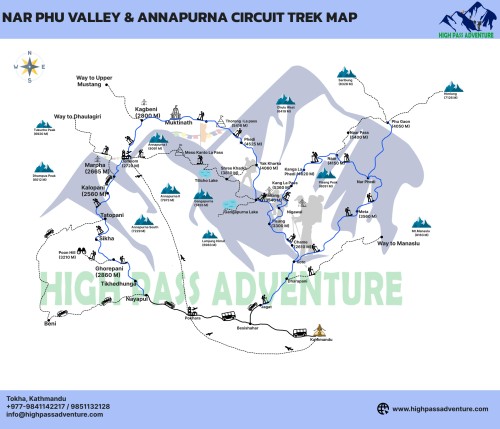
The Nar Phu Valley Trek begins at Dharapani -Dharapani is also the endpoint of the Manaslu Circuit Trek. reached after an approximately 8–10-hour drive from Kathmandu. The official trekking journey follows the classic Annapurna Circuit Trek route to Koto Village, where you spend the second night of the journey.

From Koto, the trail branches north into the remote Nar Phu Valley. You cross the Marshyangdi River and leave the main Annapurna Circuit trail to explore this less-traveled region. The route passes through narrow gorges, lush green forests, and dramatic landscapes before reaching Meta Village.

From Meta, the trekking trail continues toward Phu Village via Kyang. Along the way, you encounter high-altitude desert landscapes, rocky hills, narrow valleys, and rugged mountain scenery. Upon reaching Phu Village, you can explore its traditional stone houses, ancient monasteries, and distinctive Himalayan culture.

After exploring Phu Valley, you retrace your steps toward Meta before descending to the river and crossing it again to ascend toward Nar Village. From Nar, the route continues over the challenging Kang La Pass (5,320 m) before descending to Ngawal Village. This section offers spectacular views of the surrounding Himalayan peaks and remote mountain landscapes.

From Ngawal, you rejoin the classic Annapurna Circuit trail and continue toward Manang. The journey then proceeds to Yak Kharka and Thorong Phedi, where you spend the night before crossing the challenging Thorong La Pass (5,416 m), one of the highest trekking passes in the world.

After crossing Thorong La Pass, you descend to Muktinath, a sacred pilgrimage destination for both Hindus and Buddhists. Muktinath is renowned for its 108 sacred water spouts and the eternal flame at the temple complex.

From Muktinath, you travel by road to Pokhara and continue to Kathmandu the following day, where yours Nar Phu Valley Trek comes to an end.

Alternative Routes for the Nar Phu Valley Trek

There are several alternative routes for the Nar Phu Valley Trek, depending on your available time, fitness level, and trekking preferences.

Option 1: Nar Phu Valley Trek via Kang La Pass to Besisahar (14 Days)

After exploring the beautiful Nar and Phu villages and crossing Kang La Pass, you can descend to Ngawal and continue towards Besisahar to complete your trek. This option takes approximately 14 days and is ideal for trekkers who want to experience the highlights of the Nar Phu Valley without extending their journey.

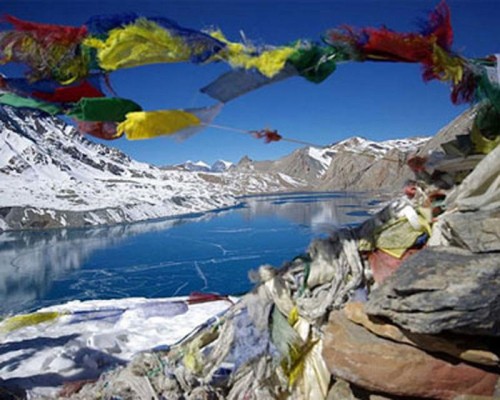
Option 2: Nar Phu Valley Trek with Tilicho Lake (17 Days)

If you have more time after crossing Kang La Pass and reaching Ngawal, you can extend your adventure to include the spectacular Tilicho Lake before continuing towards Besisahar. This option takes approximately 17 days and offers additional opportunities to enjoy the breathtaking Himalayan scenery.

Option 3: Nar Phu Valley Trek, Tilicho Lake, and Thorong La Pass

Another excellent option is to combine the Nar Phu Valley Trek with a visit to Tilicho Lake and a crossing of Thorong La Pass (5,416 m). After exploring the remote Nar and Phu villages and crossing Kang La Pass, you continue towards Tilicho Lake and join the Annapurna Circuit route to cross Thorong La Pass before descending to Muktinath. From there, you can travel to Pokhara and return to Kathmandu. The total duration depends on your chosen itinerary and transportation arrangements.

All these alternative routes offer incredible Himalayan scenery, traditional Buddhist culture, insights into the lifestyles of Himalayan communities, and opportunities to observe local wildlife.

You can choose the most suitable route based on your available time, physical fitness, and personal interests. Our High Pass Adventure team will be happy to help you customize your itinerary to create a memorable trekking experience in Nepal.

Nar Phu Valley Trek Cost

The cost of our 18-day Nar Phu Valley Trek is USD 1,250 per person, based on a minimum group size of two participants. The package covers the main trekking arrangements, from your arrival in Kathmandu until your departure from Nepal.

The cost includes all the essential services and logistics outlined in the itinerary, such as transportation, accommodation, meals, special trekking permits, a licensed trekking guide, and porter services.

However, personal expenses, travel insurance, trekking equipment, luxury accommodation, private transportation, and tips for the guide and porter are not included in the package.

For a detailed breakdown of the services covered by the package, please refer to our Cost Includes and Cost Excludes section.

The total cost may vary depending on the group size, trekking duration, type of transportation, choice of accommodation, and whether you prefer a private trekking arrangement.

At High Pass Adventure, we aim to offer reasonable, competitive, and transparent pricing for the Nar Phu Valley Trek. Our goal is to provide excellent service, professional guidance, and a memorable trekking experience that offers genuine value for your investment. By the end of the trek, you will understand the value of the services and experiences included in the package.

Why did you choose the Nar Phu Valley Trek?

If you are considering The Nar Phu Valley Trek in Nepal, it's the best choice because it offers a unique and off-the-beaten-path experience for trekkers as well as here are several reasons why you might consider choosing the Nar Phu Valley Trek. 

Remote and Unspoiled Landscape: The Nar Phu Valley is located in a remote region of Nepal, relatively untouched by modern development and tourism. This means you'll get to experience pristine natural landscapes, traditional villages, and cultural practices that have remained largely unchanged for centuries.

Unique Cultural Experience: The Nar and Phu villages are inhabited by people of Tibetan origin, who have their own distinct culture, language, and way of life. Trekking through these villages gives you the opportunity to interact with locals, learn about their customs, and witness ancient traditions firsthand.

Less Crowded Trails: Unlike more popular treks in Nepal such as the Everest Base Camp or Annapurna Circuit, the Nar Phu Valley Trek sees far fewer visitors. This means you'll have the trails mostly to yourself, allowing for a more peaceful and immersive trekking experience.

Stunning Scenery: The trek takes you through diverse landscapes, including lush forests, high alpine meadows, and rugged mountains. Along the way, you'll be treated to breathtaking views of snow-capped peaks, cascading waterfalls, and deep gorges.

Challenging Terrain: While the Nar Phu Valley Trek is not as physically demanding as some of the more high-altitude treks in Nepal, it offers a moderate level of difficulty. Trekkers can expect to encounter steep ascents and descents, high mountain passes, and unpredictable weather conditions, making it a rewarding challenge for those seeking adventure.

Opportunity for Exploration: The Nar Phu Valley Trek was opened to tourists relatively recently, there are still many unexplored areas waiting to be discovered. You will have the chance to venture off the beaten path and explore hidden valleys, ancient monasteries, and remote settlements that few outsiders have ever seen.

Benefit to Choose High Pass Adventure for Nar Phu Valley Trek

You will get numerous benefits by choosing High Pass Adventure for your trekking to Nar Phu Valley. These advantages make you the best choice for a memorable and safe journey experience. High Pass Adventure employs seasoned guides with extensive knowledge of the terrain, culture, and safety protocols. Their genuine dedication ensures that your holiday is carefully organized to be the most breathtaking experience of a lifetime. They provide invaluable insights and support throughout the trek.

We always offer tailored itineraries based on client preferences and fitness levels with comprehensive package services. Our itinerary and cost details are always clear, with sections indicating what costs are included and excluded. High Pass Adventure prioritizes safety with well-trained guides, first aid kits, and emergency evacuation plans. Regular health checks and acclimatization schedules minimize the risk of altitude sickness.

We are willing to work with you to develop an appropriate itinerary and provide a wonderful mix of high-quality accommodations, intimate small-group excursions, family tours, solitary treks, honeymoon treks, and group treks. Additionally, our guides hire strong porters to assist with carrying the luggage and have a general understanding of first aid equipment in addition to having years of expertise in the trekking industry.

Important Note for the trip:

  • During your pre-trip meeting in Kathmandu, we provide you with a free T-shirt and a warm cap (beanie), as well as a refundable duffel bag for packing your trekking gear.
  • We assign one porter for every two trekkers, so the duffel bag should weigh around 10 to 12 kg, which is carried by the porter throughout the trek. Additionally, we can arrange other working team members according to your requirements.
  • You must have your own special daypack with a waterproof cover for carrying your daily necessities things like cash, necessary papers, a water bottle or bladder, sunglass, mobile phone, power bank, a camera, toiletries, sunscreen, lip guard, a notebook, light clothing, etc. 
  • The guide will check your trekking gear and give you suggestions on what to pack and what not to pack. Any unnecessary items (non-trekking items) can be stored at the hotel or our office in Kathmandu.
  • A down jacket and a sleeping bag are required for trekking in the Nepal Himalayas. The sleeping bag should be rated for temperatures between -10 to 20 degrees Celsius, depending on the trekking route. If you don't have either of these items, you can rent them in Kathmandu for USD 2 per day. Please note that in case of loss or damage, you will be required to pay the cost of USD 100 per item.
  • Every day, the guide will brief you about the walk, nature, food, accommodation, culture, and other aspects of the trek. It's important to listen to and follow the local rules and guidelines provided by the guide.

Important Note for Itinerary:

The itinerary provided given below is a just guideline for the Nar Phu Vally Trek. If you have your own itinerary, we are flexible to follow it. If not, we will be happy to create a new itinerary based on your requirements and vacation time frame. This trek can be customized according to your preferred duration, budget, and schedule.
 

Itinerary Expand All Close All

High Pass Adventure Pvt.Ltd. welcomes you to Nepal, One of the company staff will be waiting outside the baggage hall of the Tribhuvan International Airport (TIA) in Kathmandu. You have to look for the person carrying A4 size paper with your and our company name. This person will take you to a hotel in Kathmandu from the airport. Check into the hotel, rest and fresh up and ready for the meeting to your programs in our trekking office.

Food
Welcome Dinner
Accommodation
Hotel
Elevation
1350 m.
Highest Place
Kathmandu

Today is an extra day in Kathmandu to allow trekkers arriving late at night or around midnight to rest and recover from their journey. For those who arrive early and feel ready to explore, Kathmandu Valley sightseeing is an optional activity.

After breakfast at your hotel, you can join a guided sightseeing tour with an experienced tour guide to explore four of the seven UNESCO World Heritage Sites in Kathmandu Valley: Swayambhunath, Kathmandu Durbar Square, Pashupatinath Temple, and Boudhanath Stupa.

You will travel between the sites in a comfortable private vehicle and explore each location on foot. Throughout the tour, your guide will introduce you to the fascinating history, ancient architecture, traditional art, and cultural heritage of the Kathmandu Valley, including its Buddhist and Hindu religious traditions and the daily lifestyles of local communities.

After completing the sightseeing tour, you will visit our office to finalize your trekking clothing and equipment for the Nar Phu Valley Trek. We will check your gear and help you identify any essential items you may need to buy or rent before the trek begins.

If you prefer to rest after your journey rather than join the sightseeing tour, you can spend the day relaxing at your hotel and preparing for the adventure ahead.

Food
Breakfast
Accommodation
Hotel
Elevation
1350 m.
Highest Place
Kathmandu

Today, your Nar Phu Valley Trek adventure begins with a scenic drive from Kathmandu to Dharapani. You can travel by public bus and shared jeep or arrange a private vehicle for a more comfortable journey.

After breakfast at your hotel, our guide will meet you and accompany you to the bus station to catch a public bus to Besisahar. Please be prepared for an early morning departure, as the journey to Dharapani road distance is approximately 230 km, and the journey can take around 9–10 hours, depending on traffic, road conditions, and vehicle arrangements.

The drive follows the Prithvi Highway, passing through beautiful river valleys, small towns, terraced fields, and lush green hills. At Dumre, the route turns toward Besisahar, the gateway to the Annapurna region, following the scenic Marsyangdi River through picturesque villages and fertile farmland.

Upon reaching Besisahar, you will transfer to a shared jeep for the onward drive to Dharapani. The road journey offers beautiful views of traditional Nepali villages, flowing rivers, forested hills, and terraced rice fields as you travel deeper into the Himalayan foothills.

After arriving in Dharapani, you will check into a local teahouse and enjoy a well-deserved rest before continuing your Nar Phu Valley adventure.

Food
Breakfast / Lunch /Dinner
Accommodation
Tea House
Elevation
1900 m
Highest Place
Dharapani

Today, you officially begin (Walking) trekking to the Nar Phu Valley. From Dharapani, the trail initially follows the road toward Danaque before climbing uphill to Timang along a traditional trail through beautiful forests of pine, fir, oak, and maple trees.

As you ascend toward Timang, you can enjoy spectacular views of the Manaslu mountain range and the surrounding Himalayan landscapes. Timang is a wonderful place to pause, take photographs, and appreciate the breathtaking mountain scenery.

From Timang, the trail continues along the road toward Koto, passing through picturesque villages, forested hills, and scenic landscapes. Koto is a small traditional village located approximately 30 minutes before Chame, the district headquarters of Manang.

Koto is also an important checkpoint and the official entry point for the restricted Nar Phu Valley region, where trekking permits are checked before you continue deeper into the valley. The village is home to Gurung and other local ethnic communities whose traditional lifestyles and cultural practices have been influenced by Tibetan Buddhism.

After reaching Koto, you will check into a local teahouse and rest before continuing your journey into the remote Nar Phu Valley the following day.

Food
Breakfast / Lunch /Dinner
Accommodation
Tea House
Elevation
2600 m
Highest Place
Koto

Today, you will enter the restricted Nar Phu Valley region. Before beginning the trek, you must have your special Nar Phu Valley trekking permits checked at the Koto checkpoint. After breakfast, you will begin your journey toward Meta, following a scenic trail through narrow gorges, dense forests, and beautiful Himalayan landscapes.


The trail initially passes through steep and narrow sections of the forest, including areas filled with bamboo and pine trees. Much of today's walk follows the Nar Phu Khola (river) through a deep, dramatic gorge, where towering cliffs and lush vegetation create a peaceful atmosphere.

Along the way, you will encounter a series of small wooden bridges, traditional timber shelters, and natural caves. In some places, the trail passes dramatically beneath waterfalls, adding excitement to the adventure.

The route follows the river, with a mixture of gentle, relatively flat sections and gradual ascents and descents. As you continue toward Meta, the landscape gradually becomes more open and rugged.

Before reaching Meta, you will face a longer, steeper uphill climb, which may feel challenging as you gain altitude. However, the spectacular surrounding scenery, fresh mountain air, and peaceful atmosphere make the journey truly rewarding. Walking at a steady pace and taking regular breaks will help you adjust to the increasing elevation.

After approximately 6–7 hours of trekking, you will arrive at Meta, a remote mountain settlement surrounded by dramatic hills and beautiful Himalayan scenery.

Food
Breakfast / Lunch /Dinner
Accommodation
Tea House
Elevation
3625 m.
Highest Place
Meta

After breakfast at the teahouse in Meta, you will continue your journey toward Kyang, passing through the remote settlements of Jhunam and Chyaku. Today's trail takes you across a high-altitude landscape featuring striking white rock formations, low shrubs, juniper bushes, scattered evergreen trees, reddish-orange vegetation, and layers of weathered slate. The sandy trails and rugged surroundings create a unique and beautiful Himalayan landscape.

A short walk from Meta brings you to a trail junction offering clear views toward the Nar Valley, including its traditional monasteries and chortens. You will then continue toward Jhunam before reaching Chyaku, a former Khampa settlement situated at approximately 3,800 m.

Along the way, the trail passes numerous Buddhist chortens and follows a series of uphill and downhill sections through the remote mountain terrain. As you approach Kyang, the landscape becomes increasingly dramatic, with wide-open valleys and spectacular views of the surrounding Himalayan peaks.

Upon reaching Kyang, you can enjoy breathtaking views of Pisang Peak, Annapurna II, Gyaji Kang, and other magnificent mountains. The peaceful atmosphere and traditional surroundings make Kyang a memorable stop on your Nar Phu Valley Trek.

After approximately five hours of walking, you will settle into a local teahouse and enjoy a relaxing evening in this remote Himalayan settlement.

Food
Breakfast / Lunch /Dinner
Accommodation
Tea House
Elevation
3800 m.
Highest Place
Kyang

After breakfast at the teahouse in Kyang, you will continue your journey toward the remote and culturally fascinating Phu Village. Although the distance is relatively short, today's trek takes approximately 4–5 hours because of the high altitude and challenging terrain.

Leaving Kyang, the trail enters the dry, desert-like gorge of the Phu Khola, following a dramatic route carved into the steep cliffside. You will descend along the hillside toward the riverbank, passing unusual rock formations and a small campsite surrounded by rugged Himalayan scenery.

Along the way, you can admire colorful Buddhist chortens set against spectacular canyons, deep gorges, and barren mountain landscapes. Keep an eye out for blue sheep grazing on the surrounding hillsides, as these wild animals are sometimes spotted in this remote region.

The trail continues along eroded hillsides toward the historic Phupi Gyalgen Gate before descending to a cluster of chortens near a bridge. This traditional gateway offers your first impressive views of the three settlements that make up Phu Village, along with the remains of an ancient dzong (fortress) and two historic forts, which now lie in ruins.

As you approach Phu Village, you will discover a remarkable settlement of traditional stone houses surrounded by dramatic mountains and a landscape strongly influenced by Tibetan culture. The village offers a wonderful opportunity to experience the region's unique heritage, traditional lifestyle, and peaceful atmosphere.

After approximately 4–5 hours of trekking, you will arrive in Phu Village and settle into a local teahouse for the night.

Food
Breakfast / Lunch /Dinner
Accommodation
Tea house
Elevation
4100 m.
Highest Place
Phu Village

Today is a rest and acclimatization day in Phu Village, giving you time to explore this ancient Himalayan settlement and experience its unique Tibetan-influenced Buddhist culture. Surrounded by dramatic mountains and rugged landscapes, Phu is one of the most fascinating and remote villages in the Nar Phu Valley.

You can spend the morning exploring the traditional stone houses, narrow village lanes, and local way of life. You will also have the opportunity to interact with local residents and visit Phu Monastery, an important religious site that reflects the area's rich Buddhist heritage.

If you feel comfortable and have enough energy after exploring the village and monastery, you can take a short hike into the surrounding valley. Walking uphill for a couple of hours at a comfortable pace can help you acclimatize to the altitude and prepare for the challenging mountain passes ahead.

One possible option is to hike toward Ngoru, a seasonal grazing settlement, also known as a kharka, where local herders take their yaks and sheep to graze. This gradual walk provides an opportunity to enjoy the spectacular mountain scenery while helping your body adjust to the high altitude. However, the hike should remain optional, and you should avoid overexertion during acclimatization.

Phu Village is also an excellent place to observe traditional local activities. Depending on the season, you may see villagers spinning yak and sheep wool, working with their livestock, and gathering to socialize. These everyday traditions offer a glimpse into a lifestyle that has remained closely connected to Tibetan culture and the Himalayan environment for generations.

During winter, heavy snowfall can leave Phu Village isolated, and many residents move to lower elevations, making the settlement much quieter.

After a relaxing day of cultural exploration and gentle acclimatization, you will return to your teahouse and prepare for the next stage of your Nar Phu Valley Trek.

Food
Breakfast / Lunch /Dinner
Accommodation
Tea -house
Elevation
4100 m.
Highest Place
Phu Village

After breakfast at the teahouse in Phu Village, we begin our trek to Nar Village. Although the distance is not particularly long, the journey takes approximately 8 hours due to the steep ascents and descents some part in along the trail.

Today, we trek from Phu Village back towards Phu Gate, passing through Khyang, Charkha, and Jhunam before reaching the junction where the trail branches off to the right towards Nar Village.

From there, the trail descends to the Phu Khola (river), crossing sandy gullies via bridge-like platforms. Along the way, we can see the ruins of Zampa Cho Dzong (a dzong is a fortress and Zampa means “bridge” in Tibetan). After crossing the Phu Khola, we begin the ascent towards Nar Village.

Throughout the journey, we enjoy spectacular gorges, breathtaking mountain scenery, and the rugged beauty of this remote Himalayan region. Finally, we reach the entrance gates of Nar Village at the top of the hill, passing another beautiful line of painted, bamboo-topped chortens and a large, tiered chorten.

Upon arrival in Nar Village, we check into a local teahouse and spend the night.

Food
Breakfast / Lunch /Dinner
Accommodation
Tea-house
Elevation
4110 m
Highest Place
Nar Village

Today is a rest and acclimatization day to help you conserve energy before crossing Kang La Pass. The crossing from Nar Village is a long and challenging adventure, so taking this extra day to rest and prepare is important.

Enjoy a leisurely breakfast before exploring Nar Village, visiting its local monastery, and admiring the beautiful surrounding landscapes and mountain views. You can also take time to experience the local culture and traditional village lifestyle.

The rest of the day is dedicated to relaxing, conserving energy, and preparing for the following day's trek across Kang La Pass.

Food
Breakfast / Lunch /Dinner
Accommodation
Tea-house
Elevation
4110 m.
Highest Place
Nar Village

Today is one of the major highlights of the Nar Phu Valley Trek: crossing the challenging Kang La Pass at an altitude of 5,307 m. It is a long and adventurous day, involving a steep ascent to the pass followed by a descent to Ngawal.

We start early in the morning after breakfast to reach the top of Kang La Pass as early as possible. From the summit, you can enjoy spectacular panoramic views of Pisang Peak, Annapurna II, Gangapurna, Tilicho Peak, and the surrounding Himalayan landscapes. The views are generally clearest in the morning, while strong winds and cloudy conditions may develop later in the day.

After enjoying the magnificent scenery from the pass, we begin our descent towards Ngawal. The trail offers breathtaking views of the surrounding mountains and picturesque landscapes as we pass traditional yak and sheep shelters along the way.

After a long and rewarding day of trekking, we finally arrive in Ngawal, a beautiful traditional village known for its cobbled streets, prayer wheels, and distinctive Himalayan architecture. In the past, Ngawal was also an important centre of religious and cultural activity in the region.

Upon arrival, we check into a local teahouse and enjoy a well-deserved rest after this challenging mountain adventure.

Food
Breakfast / Lunch /Dinner
Accommodation
Tea-house
Elevation
5307 m.
Highest Place
Kangla Pass

Today, we trek from Ngawal to Manang. Although the trail is relatively easy compared to the previous day's challenging crossing of Kang La Pass, it is still not a long walking day. We can enjoy a relaxed breakfast in the morning to recover from the previous day's demanding trek at high altitude.

After breakfast, we continue towards Manang, enjoying superb views of Annapurna II, Gangapurna, Annapurna III, Gandharva Chuli, and Pisang Peak along the way. The trail follows the beautiful valley alongside the Marsyangdi River, passing through pine forests, terraced farmlands, and traditional Himalayan villages.

En route, we pass through the beautiful village of Braga, where we can visit the famous Braga Monastery, an ancient Buddhist monastery rich in local culture and history. Throughout the journey, we can admire the magnificent Annapurna range, Tilicho Peak, and the surrounding mountain landscapes.

Finally, we arrive in Manang, a charming Himalayan town known for its spectacular mountain scenery, traditional architecture, and unique local culture. Upon arrival, we check into a local teahouse and enjoy a relaxing evening.

Food
Breakfast / Lunch /Dinner
Accommodation
Tea-house
Elevation
3570 m.

After breakfast in Manang, we continue our trek towards Yak Kharka. The trail gradually ascends from Manang Village to Gunsang, passing through Tengi Village before leaving the Marsyangdi Valley and turning right into the Jharsang Khola Valley.

Along the way, we pass through high-altitude, barren landscapes and alpine juniper bushes. From Gunsang onwards, the trail becomes relatively gentle, with a mixture of gradual ascents and descents. Throughout the journey, you can enjoy spectacular mountain views and may have the opportunity to spot wildlife such as blue sheep, marmots, and other Himalayan animals.

Although today's trek is relatively short, walking at this altitude may still feel physically demanding as your body continues to acclimatize to the increasing elevation.

Upon arrival in Yak Kharka, we check into a local teahouse and spend the night.

Food
Breakfast / Lunch /Dinner
Accommodation
Tea- House
Elevation
4050 m.
Highest Place
Yak Kharka

Today, we trek from Yak Kharka to Thorong Phedi, covering a distance of approximately 6 km. Although the distance is relatively short, the walk takes around 4–5 hours due to the high altitude and gradual ascents along the trail.

After breakfast in Yak Kharka, we begin our trek towards Thorong Phedi. The trail gradually ascends to Ledar before continuing with a mixture of gentle ascents and descents towards a river. After crossing the suspension bridge, we climb gradually past a small teahouse before continuing for approximately another hour to reach Thorong Phedi.

Thorong Phedi, situated at an altitude of 4,450 m, is the main base for crossing Thorong La Pass (5,416 m). Spending the night here is important to rest and prepare for the challenging pass crossing the following day.

Some trekkers choose to continue to Thorong High Camp (4,800 m), but we recommend staying overnight at Thorong Phedi to get adequate rest before the long and demanding journey ahead. If you arrive early and feel well acclimatized, you may take a short hike towards Thorong High Camp for additional altitude exposure, provided conditions are safe and your guide approves.

After reaching Thorong Phedi, we check into a local teahouse, enjoy Lunch, dinner, and rest for the following day's adventure across Thorong La Pass.

Food
Breakfast / Lunch /Dinner
Accommodation
Tea-house
Elevation
4450 m.
Highest Place
Thorong Phedi

Today is one of the major highlights of the Nar Phu Valley + Annapurna Circuit Trek: crossing the challenging Thorong La Pass at an altitude of 5,416 m. It is a long and demanding trekking day, involving a significant ascent from Thorong Phedi (4,525 m) to the pass, followed by a long descent to Muktinath (3,800 m).

We wake up early in the morning and have breakfast before beginning our trek. An early start is essential to cross the pass before weather conditions deteriorate later in the day.

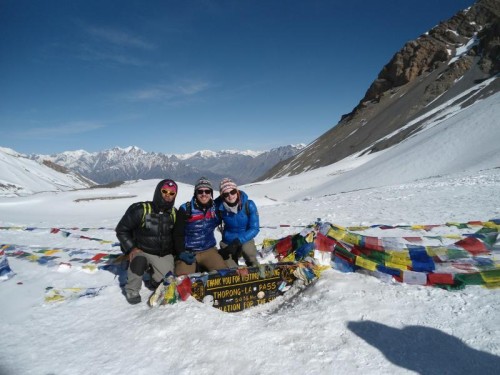
The trail climbs gradually towards the top of Thorong La Pass, which usually takes approximately 3–5 hours, depending on your pace and trail conditions. Upon reaching the summit, you can enjoy spectacular panoramic views of the surrounding Himalayan peaks, take photographs, and celebrate the achievement of crossing one of the highest trekking passes in the world.

After spending some time at the top, we begin the long descent towards the Mustang region. The trail descends steeply to Chabarbu, where we can stop at a teahouse for lunch and a short rest. After lunch, we continue downhill towards Muktinath.

Muktinath is a famous pilgrimage site for both Hindu and Buddhist devotees, known for its religious significance and spiritual atmosphere. After a long and challenging day on the trail, arriving in Muktinath offers a welcome opportunity to rest and recover.

Although today's trek is physically demanding due to the high altitude, steep ascent, and long descent, reaching the top of Thorong La Pass is an incredible achievement and a memorable highlight of your Himalayan adventure.

Food
Breakfast / Lunch /Dinner
Accommodation
Tea-housee
Elevation
5416 m.
Highest Place
Thorong La Pass

Today marks the final day of your Nar Phu Valley and Annapurna Circuit adventure, and the exciting part is that you no longer need to walk! After breakfast in Muktinath, we begin our scenic drive to Pokhara, following the road that connects Muktinath with the beautiful lakeside city.

The journey takes approximately 7–8 hours, including stops for lunch and refreshments. The road is a combination of paved and unpaved sections, passing through the spectacular Kali Gandaki Valley. Along the way, you will enjoy views of traditional Nepali villages, cascading waterfalls, towering mountains, and beautiful natural landscapes.

Upon arrival in Pokhara, your guide will accompany you to your hotel, where you can relax and recover after the long drive. If time permits, you can explore Pokhara's beautiful lakeside area, take a peaceful walk around Phewa Lake, or enjoy the city's cafés and restaurants.

Your Nar Phu Valley Trek adventure concludes in the beautiful city of Pokhara. You can take a refreshing shower, enjoy a delicious meal with your guide and porter, and relax after your memorable Himalayan journey.

Get a good night's rest and prepare for your journey back to Kathmandu the following day.

Food
Breakfast / Lunch /Dinner
Accommodation
Tea - house
Elevation
850 m.
Highest Place
Pokhara

Today marks the final day of your trekking adventure in Nepal. After breakfast at your hotel in Pokhara, we travel back to Kathmandu by tourist bus. The bus departs at 7:00 a.m., so we need to leave the hotel at around 6:30 a.m. to reach the bus station on time.

The journey covers approximately 200 km and takes around 6–8 hours, depending on traffic and road conditions. Most sections of the highway are paved, although some stretches may be under construction or in less-developed condition. Along the way, you can enjoy scenic views of river valleys, traditional towns, terraced farmlands, and lush green hills as we make our way back to Kathmandu.

Upon arrival in Kathmandu, you will be transferred to your hotel, where you can relax and unwind after the long journey.

In the evening, we will invite you to a special farewell dinner at a traditional Nepali cultural restaurant. You can enjoy delicious Nepali cuisine along with traditional music and cultural dance performances, providing a wonderful opportunity to celebrate the successful completion of your Himalayan adventure.

Food
Breakfast / Lunch /Dinner
Accommodation
Hotel
Elevation
1350 m.
Highest Place
Kathmandu

Today marks the final day of your Nar Phu Valley Trek in Nepal. According to your flight schedule, one of our High Pass Adventure team members will accompany you to Tribhuvan International Airport in Kathmandu for your departure.

We hope you have enjoyed your trekking adventure and created wonderful memories of Nepal's beautiful mountains, traditional villages, and unique culture.

If you plan to visit Nepal again for another trekking adventure or other exciting activities, High Pass Adventure will be delighted to assist you in planning your next journey.

We would also greatly appreciate it if you could share your feedback and leave a review of your trekking experience and our services. Your valuable feedback helps us improve our services and assist future trekkers in choosing their Himalayan adventure.

Thank you for choosing High Pass Adventure. We wish you a safe journey home and hope to welcome you back to Nepal soon!

Food
Breakfast
Explore the route

Altitude & route map

Open a preview for a full-size, zoomable view.

Nar Phu Valley Trek altitude profile

Route map

Nar Phu Valley Trek route map

Service Includes/Excludes

Includes

Our well-experienced and genuinely knowledgeable trekking guides and the best porters at High Pass Adventure have been working together to provide excellent service, ensuring a quality tour that creates a lifetime of memorable experiences. We pay our trekking and tour guides and porters salaries that are higher than the government-fixed amounts. All our costs are transparent; clearly detailing what is included and excluded. You can follow the listing below for more details about the costs:

Cost Included Section 

  • Airport pick-up and drop-off service, by private vehicles.
  • Three nights' hotel accommodation in Kathmandu (two stars) with BB (EP) plan
  • One night hotel accommodations in Pokhara (tourist class) with BB (EP) plan
  • Kathmandu valley sightseeing (Bhaktapur Durbar Squire, Pasupatinath and Bouddhanath) with tour guide and private vehicle
  • Transportation includes a public bus from Kathmandu to Besisahar and Dharapani, and from Muktinath to Pokhara. Additionally, a tourist bus is provided for the journey from Pokhara to Kathmandu.
  • Three meals per day during the trek (breakfast, lunch, and dinner), along with one cup of tea or coffee per meal. You can choose from the menu, but only one item per meal.
  • Seasonal fresh fruits will be provided every night after dinner 
  • Accommodation will be in tea houses during the trek, with basic twin-sharing rooms
  • An experience English Speaking trained, Government license Holder Guide
  • Porter, we assign one porter for every two trekkers, a porter typically carries 20 to 25 kg
  • An extra assistant guide is provided for groups with more than 6 participants
  • All trekking permits, including Annapurna Conservation Area project (ACAP) and TIMS (Trekkers' Information Management System) and special Nar Phu Valley Trek Permit
  • All applicable taxes as per government rules and regulations
  • First Aid medical kit, Oxy-meter to check pulse, heart rate and oxygen saturation at higher altitude (Very useful to check Altitude Mountain Sickness (AMS) symptoms)
  • Guide and porter salary, food, accommodation and insurance during the trek
  • Use of down Jacket, sleeping bag and walking Poles (if you don’t have your own, to be return after the trip is completed). Using these 3 items you pay $10 USD each as maintenance and washing charge
  • If you need a duffel bag to pack your trekking gear, we provide one free of cost. However, it must be returned after the trip is completed.
  • Tour Certificate after complete the trip
  • Annapurna Region Trekking route map (one map for one group) included Nar-Phu Valley
  • A complimentary High Pass Adventure T-shirt and warm hat are included!
  • Farewell dinner with traditional Nepali music and cultural dance will be held at a local restaurant

Excludes

  • Nepal entry visa fee $50 USD for 30 days visa on arrival.
  • Lunch and dinner in Kathmandu and Pokhara 
  • Extra night hotel accommodation in Kathmandu and Pokhara other than itinerary as well as extra trekking days
  • Travel insurance and Mountain rescue service (covers emergency Rescue and Evacuation)
  • Personal nature expenses (phone, laundry, water, bar drinks, battery recharge, donations, shopping, extra porters, hot shower etc.)
  • Entrance fees for Kathmandu Valley sightseeing that cost $30, as well as monasteries and monuments during the trek
  • If you are single, Porter cost is extra ($300)
  • If you prefer to fly from Kathmandu to Pokhara, the flight cost is $105 
  • Tips to Trekking staff (Tips is expected)
  • Any other expenses that aren’t mentioned in the section above

Frequently Asked Questions

17 answers about the Nar Phu Valley Trek

The Nar Phu Valley Trek is located in the central Himalayas of Nepal, within the Annapurna region and the Annapurna Conservation Area in Manang District, just north of Manang Village.

To reach Nar Phu Valley, trekkers follow the Annapurna Circuit route to Koto Village, where the trail branches off toward the remote Nar and Phu valleys, following the Nar Khola and Phu Khola.

The combined trekking route starts from Dharapani, continues to Koto, and enters the remote Nar Phu Valley. After exploring the traditional villages of Phu and Nar, trekkers cross the spectacular Kang La Pass (5,320 m) and descend to Ngawal Village, where the route rejoins the Annapurna Circuit.

Choosing the Nar Phu Valley Trek is a great idea if you are looking for a unique and less-crowded trekking experience in the Annapurna region. It offers an excellent alternative to the Manaslu Circuit and Annapurna Circuit treks, combining spectacular natural beauty with rich Tibetan Buddhist cultural heritage.

The Nar Phu Valley is home to traditional villages where people follow Tibetan Buddhist traditions and maintain a lifestyle closely connected to their ancient culture. Along the trail, you can enjoy breathtaking mountain views, dramatic high-altitude desert landscapes, ancient monasteries, traditional stone houses, and opportunities to spot Himalayan wildlife.

With its untouched natural beauty, unique culture, peaceful surroundings, and authentic Himalayan experience, the Nar Phu Valley Trek is a remarkable adventure that everyone should experience at least once in their lifetime.

Absolutely! The Nar Phu Valley Trek is definitely worth it for several reasons, including its unspoiled natural beauty, unique cultural experiences, diverse landscapes, breathtaking mountain views, and adventurous high-altitude trails.

Overall, if you are looking for an adventure that combines spectacular Himalayan scenery, authentic Tibetan-influenced culture, remote traditional villages, and a true sense of exploration in one of Nepal's less-traveled regions, the Nar Phu Valley Trek is an excellent choice. It is a once-in-a-lifetime experience and a wonderful opportunity to discover the authentic beauty and culture of Nepal.

The best time to visit the Nar Phu Valley is during the autumn (mid-September to mid-November) and spring (mid-March to mid-May) seasons. Both seasons offer excellent weather conditions, with moderate temperatures and generally stable weather, making them ideal for trekking.

During these months, you can enjoy clear mountain views, beautiful surrounding landscapes, and excellent visibility for photography. The trails are also generally more suitable for trekking, with less rain and snow compared to other seasons.

Therefore, spring and autumn are the most recommended seasons for the Nar Phu Valley Trek, offering the best combination of pleasant weather, breathtaking scenery, and an enjoyable trekking experience.

The Nar Phu Valley Trek takes 18 days in total, following our standard itinerary in Nepal. This includes your arrival in Nepal and departure from the country, three nights of accommodation in Kathmandu, approximately three days of road travel, and 12 days of trekking in the Himalayas.

This itinerary allows you enough time to explore the beautiful Nar and Phu villages, experience the unique Tibetan Buddhist culture, enjoy spectacular Himalayan scenery, and cross the challenging Kang La Pass and Thorong La Pass.

Yes, you can extend the Nar Phu Valley Trek depending on your available time and preferences. If you would like to extend your adventure, you can include a visit to the beautiful Tilicho Lake or add extra days to enjoy shorter and more flexible trekking stages.

We recommend adding 2–3 extra days to explore Tilicho Lake and its spectacular surrounding Himalayan landscapes. This extension will allow you to enjoy more of the Annapurna region at a relaxed pace and experience even more of its natural beauty.

Yes, it is possible to complete the Nar Phu Valley Trek in less than 18 days. If you are short on time, you can shorten the itinerary by driving to Besisahar and continuing to Kathmandu after crossing Kang La Pass and reaching Ngawal.

With this alternative route, you can complete the trip in approximately 14 days in total, including your arrival in and departure from Nepal.

However, please note that this shorter itinerary does not include crossing Thorong La Pass or visiting Muktinath. It is a good option if you want to explore the beautiful Nar and Phu valleys and cross Kang La Pass while saving a few days.

Yes, it is possible to complete the Nar Phu Valley Trek in 10 days if you have a limited time frame and are an experienced trekker with good physical fitness. However, you should allow an additional two days in Kathmandu for your arrival and departure, making the total trip approximately 12 days.

Generally, the Nar Phu Valley Trek takes around 10–20 days, depending on the chosen route, trekking pace, and any additional side trips or acclimatization days.

The trek is also often combined with the Annapurna Circuit Trek, which adds extra days to the overall itinerary. The total duration can vary depending on your preferences, available time, and the time you wish to spend exploring the region and acclimatizing to the altitude.

The Nar Phu Valley Trek is considered a moderately difficult to challenging trek due to its remote location, high-altitude terrain, and challenging mountain passes, including Kang La Pass and Thorong La Pass.

The trek involves steep ascents and descents, rugged trails, and long walking days, which require good physical fitness, stamina, and proper preparation. Along the route, you will encounter narrow gorges, suspension bridges, and high mountain passes, making some sections physically demanding.

Compared to popular trekking routes such as the Everest Base Camp and Annapurna Circuit treks, the Nar Phu Valley Trek is less frequently visited because of its remote location and restricted-area permit requirements.

Previous trekking experience, good physical fitness, and proper acclimatization are highly recommended to complete and enjoy the challenging Nar Phu Valley Trek safely.

Proper preparation is essential for a safe and enjoyable Nar Phu Valley Trek. First, choose a reputable trekking agency and familiarize yourself with the trekking route, itinerary, altitude, difficulty level, and estimated budget.

Physical fitness is also important, so we recommend starting your training at least two months before the trek. You can prepare by walking for 1–2 hours daily, hiking, swimming, cycling, and doing stretching exercises to improve your stamina, strength, and endurance.

Additionally, hiring an experienced trekking guide and a reliable porter will make your journey more comfortable and manageable. Always follow the recommended itinerary, allow sufficient time for acclimatization, and listen to your guide's instructions throughout the trek. With proper planning, physical preparation, and professional guidance, you can safely enjoy and successfully complete the Nar Phu Valley Trek.

The Nar Phu Valley Trek with the Annapurna Circuit Trek is an combined trekking adventure that can be completed in approximately 18 days, following our recommended itinerary. However, some trekking agencies offer the Nar Phu Valley Trek and the Annapurna Circuit Trek as separate trekking packages.

The main difference between these two treks is that the Nar Phu Valley Trek is a remote, adventurous, and less-traveled route in the Annapurna region of Nepal. It requires a special restricted-area trekking permit, and trekkers must be accompanied by a licensed guide. The route takes you through remote traditional villages, ancient monasteries, rugged landscapes, and spectacular mountain scenery, with breathtaking views of the Annapurna and Manaslu ranges.

In contrast, the Annapurna Circuit Trek is a more established and popular trekking route that experienced trekkers can undertake independently, as hiring a guide is not mandatory under the applicable trekking regulations.

The Nar Phu Valley route eventually connects with the Annapurna Circuit, allowing trekkers to experience the best of both worlds: the remote cultural beauty and wilderness of Nar Phu Valley, followed by the classic Himalayan adventure of the Annapurna Circuit, including the spectacular Thorong La Pass (5,416 m).

Yes, since 2026, solo trekkers can undertake the Nar Phu Valley Trek. However, hiring a licensed trekking guide and obtaining a special restricted-area permit are still mandatory. Until 2025, solo trekking was not permitted in the Nar Phu Valley restricted area.

Therefore, even if you are travelling alone, you must arrange your trek through a reputable registered trekking agency in Nepal, as the special Nar Phu Valley restricted-area permit must be arranged through an authorized trekking agency.

With a licensed guide and proper permits, you can enjoy the Nar Phu Valley Trek as a solo traveler without needing to join a group.

The booking and payment process for the Nar Phu Valley Trek with High Pass Adventure is simple, easy, and flexible.

To book your trip, first select your preferred trekking package and click the "Book This Trip" button on the right-hand side of the package page on our website. Then, send us an inquiry with your preferred services and travel dates. We will provide you with all the necessary information, including itinerary details, package costs, available departure dates, and other important arrangements.

Once you have reviewed the information and confirmed your trip, you will need to send us a copy of your passport and confirm your exact trekking dates so that we can arrange the necessary permits, guides, and other trekking services.

To confirm your booking, we require a 20% advance deposit of the total trip cost, which can be paid through bank transfer or online banking. We will provide you with the necessary bank details and payment instructions.

The remaining balance can be paid either in cash or by bank transfer after your arrival in Kathmandu or before the trek begins.

Our team will assist you throughout the booking process and ensure that all the necessary arrangements are made for a smooth and enjoyable Nar Phu Valley Trek.

If you need to cancel your trip for personal reasons after paying the advance deposit and request a refund, we will refund the applicable amount. However, please note that the bank transfer process may take some time, depending on the banking procedures.

Therefore, we highly recommend that trekkers consider postponing their trip to a later date or transferring their advance deposit to a friend or family member who may wish to join the trek in the future. This way, your advance deposit can still be used for another trip rather than going through the refund process.

At High Pass Adventure, we aim to offer flexible solutions and make the booking and cancellation process as convenient as possible for our clients.

After paying the full package cost for the Nar Phu Valley Trek, we recommend carrying at least NPR 1,500 (approximately USD 10) per person per day for personal expenses.

This money will cover additional expenses such as extra drinks, snacks, beverages, bar bills, internet access, and occasional upgrades to more comfortable accommodation.

However, your daily spending may vary depending on your personal preferences and spending habits. If you plan to enjoy extra services or purchase additional items during the trek, we recommend carrying more cash accordingly.

Yes, there are ATM facilities in some towns along the Nar Phu Valley Trek route, including Besisahar, Chame, Manang, and Jomsom. However, ATM services in these remote mountain areas can be unreliable, and withdrawal fees may be higher than in major cities. Sometimes, ATMs may not be operational due to technical problems or network issues.

Therefore, we strongly recommend withdrawing enough Nepali cash in Kathmandu before starting the trek to cover your personal expenses throughout the journey. It is better not to rely on ATMs along the trekking route.

The cost of our 18-day Nar Phu Valley Trek is USD 1,250 per person, based on a minimum group size of two participants. The package covers the entire trekking arrangement, from your arrival in Kathmandu until your departure from Nepal.

The cost includes all the necessary services and logistics according to the itinerary, such as transportation, accommodation, meals during the trek, special trekking permits, a licensed trekking guide, and porter services.

However, the package does not include personal expenses, travel insurance, trekking equipment, luxury accommodation, private transportation, or tips for the guide and porter.

Our package is designed to provide a comfortable, safe, and well-organized trekking experience, allowing you to enjoy the remote beauty and cultural highlights of the Nar Phu Valley without worrying about the major trekking arrangements.

Traveller Useful Information

Practical notes that help you prepare for this journey.

Nar Phu Valley Trek Location

The Nar Phu Valley Trek is located in Nepal's central Himalayas, within the Annapurna region and the Annapurna Conservation Area. However, it is a restricted area for trekkers in the Manang District, situated just behind Manang Village. To reach Nar Phu Valley from Manang Village, trekkers need to cross the high-altitude Kangla Pass (5,316 meters). The Annapurna Conservation Area is the largest protected area in Nepal and encompasses a diverse range of ecosystems, landscapes, and cultural experiences. As a result, this trek offers a unique blend of cultural and natural experiences and is known for being a hidden gem in the Annapurna region.

The trek usually starts from Syange or Dharapani, which is about an 8 to 10-hour drive from Kathmandu, and ends at the same place after visiting the Nar Phu Valley. Alternatively, it can end in Naya Pul, followed by a drive to Pokhara after crossing the Kang La Pass (5,316 meters) and Thorong La Pass (5,416 meters). The trail follows the Annapurna Circuit trekking route until Koto, where it diverges to follow the Nar Phu Khola to Nar Phu Valley. After crossing the Kang La Pass, the trail rejoins the Annapurna Circuit trekking route from Manang.

The Nar Phu Valley offers breathtaking views of famous peaks and diverse ecosystems. It features a variety of landscapes, from subtropical forests and terraced fields to high-altitude deserts and alpine meadows, along with rich Tibetan culture. The trek also passes through several ethnic villages, including those of the Gurung communities, making it one of the most interesting trekking routes in Nepal for nature and culture.

Best Time to Nar Phu Valley Trek

The best time trekking seasons in the Nar Phu Valley, as with much of the Annapurna region in Nepal, are the autumn (September to November) and spring (March to May) seasons. These seasons offers the stable weather conditions, clear skies, and moderate temperatures. That time is perfect for trekking experience. 

Here is a breakdown of each season:

Autumn (September to November):

  • This is considered the best time for trekking in the Nar Phu Valley due to stable weather conditions, clear skies, and moderate temperatures.
  • The autumn months offer excellent visibility of the surrounding mountain peaks and landscapes.
  • The trails are usually dry and easier to navigate during this time.
  • Expect more fellow trekkers on the trails and in teahouses due to its popularity.

Spring (March to May):

  • This season is another excellent time to trek in the Nar Phu Valley, with warmer temperatures and blooming rhododendron forests adding to the beautiful scenery.
  • Days are longer, allowing for more time to explore and enjoy the surroundings areas.
  • The trails will be busier compared to other times of the year. 
  • There might be occasional rain showers, particularly in late spring, so be prepared for some wet weather.

While autumn and spring are generally best time for trekking in Nar Phu Valley due to favorable weather conditions, it's necessary to consider your personal preferences and priorities. Some trekkers may prefer quieter trails and are willing to trade off perfect weather for solitude, in which case the shoulder seasons like early spring or late autumn could be suitable alternatives. 

Additionally, if you're prepared for colder temperatures and possible snow, trekking in the winter months (December to February) can also offer unique experiences with fewer crowds. However, be aware of potentially harsh weather conditions and the need for proper gear and preparation. Conversely, trekking in the monsoon season (June to August) is not advisable due to heavy rainfall and increased risk of landslides and difficult trail conditions.

Temperature of Nar Phu Valley Trek

The temperatures in the Nar Phu Valley during trekking seasons will be varying significantly depending on the time of day, elevation, and the specific month you're trekking in. Here is a general overview of the temperature ranges you can encounter during different seasons:

Autumn (September to November):

  • Daytime temperatures in the Nar Phu Valley during autumn typically range from around 10°C to 20°C (50°F to 68°F) at lower elevations.
  • In higher elevations and during early mornings and evenings, temperatures can drop significantly, ranging from 0°C to 10°C (32°F to 50°F) or even lower.
  • As you ascend to higher altitudes, temperatures will generally decrease, so you have to be prepared for colder conditions at places like high pass (Kangla 5316 meters). 

Spring (March to May):

  • Daytime temperatures in spring are similar to autumn, ranging from around 10°C to 20°C (50°F to 68°F) at lower elevations.
  • Nights and early mornings may still be chilly, especially at higher elevations, with temperatures ranging from 0°C to 10°C (32°F to 50°F).
  • As spring progresses, temperatures gradually increase, and you may experience warmer weather towards the end of the season.

Winter (December to February):

  • Winter temperatures in the Nar Phu Valley will be quite cold, especially at higher elevations.
  • Daytime temperatures may range from 5°C to 15°C (41°F to 59°F) at lower elevations, but they can drop below freezing at higher elevations.
  • Nights and early mornings are typically much colder, with temperatures often dipping below freezing, sometimes as low as -10°C to -15°C (14°F to 5°F) or even lower, depending on altitude and weather conditions.
  • You have to be prepared for snow and icy conditions, especially in higher elevations and on mountain passes, if you are trekking in winter season.

It's necessary to pack appropriate clothing layers to accommodate these temperature fluctuations, including lightweight and breathable clothing for warmer weather and insulated layers for colder conditions. Additionally, always check the weather forecast before start your trek and be prepared for changes in weather patterns, especially at higher elevations where conditions might be more unpredictable.

Required Permits and Cost for Nar Phu Valley Trek

For the Nar Phu Valley Trek, you need several permits because it is situated in both the Annapurna Conservation Area and a restricted area. Therefore, it is necessary to obtain the ACAP permit, the restricted area permit, and the TIMS card. The TIMS card is used for tracking trekkers to ensure their safety and security during trekking activities.

Here are the main permits you'll need:

TIMS Card (Trekker's Information Management System):

  • The TIMS card is required for all trekkers in Nepal, including those trekking in the Nar Phu Valley.
  • It helps authorities keep track of trekkers and provide assistance in case of emergencies.
  • The TIMS Card cost is NPR 2000 per person 

Annapurna Conservation Area Permit (ACAP):

  • The Nar Phu Valley lies within the Annapurna Conservation Area, so an ACAP permit is required.
  • The ACAP permit helps fund conservation efforts and supports local communities in the region.
  • The cost of ACAP permits is NPR 3000 per person 

Restricted Area Permit (RAP) for Nar Phu Valley:

  • The Nar Phu Valley is a restricted area, so you'll need a Restricted Area Permit (RAP) to trek there.
  • The cost of RAP permits is $90 per person for seven days
  • This permit is issued by the Department of Immigration in Kathmandu through a registered trekking agency and be accompanied by a licensed guide to obtain the RAP for Nar Phu Valley.

All the permits will arrange by our team, providing the necessary documents from the tourism board, immigration office of Kathmandu, and TAAN office. We ensure that all necessary permits are obtained before the trek, and you will have the support of experienced guides and porters throughout your journey. 

Nar Phu Valley Trek Cost

This Nar Phu Valley Trekking package follows an 18-day itinerary with connected to the Annapurna Circuit Trek. The cost of the Nar Phu Valley Trek is generally more expensive compared to the Annapurna Circuit Trek due to the trek's longer duration, remote location, and the required permits.

The cost of a 18-day Nar Phu Valley Trek can vary depending on several factors such as the services you need, trekking duration, group size, type of accommodation, guide/porter services, starting and ending point and additional activities. Prices start from USD 950 per person and can go up to USD 1350 per person for a full package from arrival to departure in Kathmandu. Our pricing is transparent; clearly stating what is included and excluded.

Typically, the total cost includes accommodation, transportation, food, trekking permits, guide, and porter services. However, if you require luxury facilities along the trek, there will be additional costs.

Nar Phu Valley Trek Difficulty

The Nar Phu Valley Trek is considered a moderate challenging trek in the Annapurna region of Nepal. It's often seen as an alternative or an extension to the more popular Annapurna Circuit Trek. The difficulty level of this trek will be varying depends on several factors including the weather, your level of fitness, and the specific route you take within the valley.

Here are some reasons to the difficulty of the Nar Phu Valley Trek. 

Altitude: The trek involves significant altitude gain, with some Kangla Pass reaching over 5,000 meters (16,400 feet). Altitude sickness can be a concern for trekkers, so proper acclimatization and slow ascents are crucial.

Remote and rugged terrain: The Nar Phu Valley is relatively isolated and less developed compared to other trekking routes in the Annapurna region. The trail is steep, rocky, and challenging to navigate at times.

Weather conditions: Weather in the Himalayas will be changeable, with conditions ranging from clear skies to snowstorms. You should be prepared for cold temperatures, especially at higher elevations, and be ready to adapt their plans accordingly.

Length and duration: The Nar Phu Valley Trek typically takes around 10-14 days to complete, depending on the specific itinerary. Long days of hiking and camping in remote areas require stamina and endurance.

Accommodations and Food during the Nar Phu Valley Trek

Accommodations and food during the Nar Phu Valley Trek are limited, but there are enough for small groups, and more teahouses for accommodation are increasing. They provide the best food, grown in their gardens, and welcome visitors warmly, as if they were family. Your guide helps to manage the best accommodation and provides the best food along the Nar Phu Valley Trek

Teahouses/Guesthouses: Along the main routes of the Annapurna region, including the Nar Phu Valley Trek, there are basic teahouses or guesthouses available for accommodation. These teahouses typically offer dormitory-style rooms or private rooms with basic facilities such as a bed, blanket, and sometimes a shared bathroom. While they may not be luxurious, they provide a warm and comfortable place to rest after a day of trekking. Some guest houses offer luxurious accommodations with attached bathrooms and hot showers. For such luxurious accommodations, you need to coordinate with your guide. The guide helps to find the best accommodation during the Nar Phu Valley Trek

Food: Most teahouses and guesthouses along the Nar Phu Valley Trek offer simple but hearty meals. Typical menu items include dal bhat (rice with lentil soup), noodles, pasta, rice, potatoes, and seasonal vegetables. You can also find some Western dishes such as pizza and pancakes, although the availability may vary. Tea, coffee, soft drinks, and bottled water are usually available for purchase as well.

Water: It's necessary to stay hydrated while trekking to Nar Phu Valley, so it's recommended to bring a reusable water bottle or hydration system. While bottled water is available for purchase at teahouses along the trek but quite expensive then you expected, so it's better for the environment to refill your bottle with filtered or boiled water, which is often provided free of charge or for a small fee.

Special Dietary Needs: If you have specific dietary requirements or restrictions (e.g., vegetarian, vegan, gluten-free), it's a good idea to inform to us in advance so we can make arrangements accordingly. While options will be limited, most teahouses are willing to accommodate dietary preferences to the best of their ability.

What are physical preparations requires for Nar Phu Valley Trek? 

The Nar Phu Valley Trek is a stunning trekking route located in the Annapurna region of Nepal. It's a relatively remote and less-traveled area and challenging trails compared to some of the more popular trekking routes in the region like the Annapurna Circuit or Everest Base Camp trek.

Here are some physical preparations you should consider for the Nar Phu Valley Trek:

Cardiovascular Fitness: The trek involves walking long distances and ascending to high altitudes. Therefore, good cardiovascular fitness is necessary. Activities such as hiking, cycling, running, or swimming can help improve your cardiovascular stamina.

Strength Training: While cardiovascular fitness is important, don't overlook the need for strength training. Trekking involves carrying a backpack and navigating challenging terrain, so building strength in your legs, core, and upper body can be beneficial. Incorporate exercises like squats, lunges, planks, and shoulder presses into your workout routine.

Endurance Training: Gradually increase the duration and intensity of your workouts to build stamina. This will help prepare your body for the long days of trekking and the varying terrain you'll encounter along the way.

Flexibility and Balance: Flexibility and balance are important for navigating uneven terrain and preventing injuries. Incorporate stretching exercises and activities like yoga or Pilates into your routine to improve flexibility and balance.

Mental Preparation: Trekking in remote areas like the Nar Phu Valley can be mentally challenging due to the physical exertion, altitude, and isolation. Prepare yourself mentally for the journey by setting realistic expectations, practicing mindfulness or meditation, and cultivating a positive mindset.

Hydration and Nutrition: Stay hydrated and maintains a balanced diet leading up to and during the trek. Proper hydration and nutrition are essential for sustaining energy levels and aiding in recovery.

Medical Check-up: Before embarking on Nar Phu Valley trekking, it's advisable to undergo a medical check-up to ensure you're physically fit for the journey.

Money exchange rate and prices

If you're seeking for the best foreign exchange rates and locations in Nepal, you may easily exchange the majority of your foreign currency at a local bank or authorized money exchange facility in a well-known tourist destination. The Nepal Rastra Bank controls all exchange rates (Center Bank of Nepal). You can exchange small amounts of money at the hotel if you want to. Because our banks will not take dirty or old notes, kindly bring clean and fresh notes.

In order to avoid the time-consuming processes associated with cards and traveler's checks, Nepalese people typically prefer cash in hotels, restaurants, shopping malls, and other locations. You can use an ATM to get cash (in Nepali Rupees) if you have a credit or debit card. In the main tourist city, there are a number of ATM counters with 24-hour service. If you use a card, the maximum withdrawal amount is between 30,000 and 35,000 rupees at once, plus a processing fee of 500 rupees. 

You must convert your money in Kathmandu or Pokhara before the hike because the majority of trekking routes do not offer a facility for international currency exchange. Additionally, inquire about the amount of money required for a Himalayan trek from your trekking operator or guide.

Safety and security

When traveling in Nepal, safety and security are crucial issues to consider both on the way to in and out. We are here for you at all times, and we promise to provide the greatest service to all of our cherished clients. Our guides have extensive training in the field of trekking and broad understanding of first aid items. Because it rises more than 4000 m above sea level, it is essential for hiking in Nepal. Because health is crucial, if a trekker becomes ill from the high altitude, our knowledgeable guide discusses the necessary medications and decides to continue the trek while organizing the emergency rescue.

You must be cautious when hiking trails pass one other because they are not wide enough to do so. During the busiest trekking season, there are lots of porters, yaks, mules, and Jokpe along the trail. You must stay on the safe side if you encounter them on a bridge or in a confined space because otherwise they may force you over the edge.

Safe drinking water

For a healthy body while traveling and staying hydrated, clean water is essential. It will be the most effective method of completing the Himalayan journey. If not, getting sick and having diarrhea is simple. Almost everywhere during the Nepalese tea house trip, but not during the camping trek, sells bottled water. Unfortunately, bottled water is very pricey. 

Please bring good water bottles (for boiling water) and water purification tablets or water filter bottles since plastic bottles are detrimental for the environment. Reusable water bottles are a good idea because they help keep the mountain clean. If you are concerned about finding a typical water tap to fill up your bottles in the trekking region of Nepal, they are very simple to locate. It can be found in rivers, streams, and lodges.

Travel insurance and insurance policy

Nepal hiking tours: The difficulty levels of the Himalayas range from easy to tough. As a result of the Himalayan climate changing, there is a risk of high altitude and potential mishap. 

Trekking in the Nepalese Himalayas demands practical trekking abilities at high altitudes (above 4,000 meters), so travel insurance is essential. If an accident occurs during a trip and requires medical attention or evacuation, the cost of returning to a city and receiving treatment may be significant. Therefore, you must ensure that your insurance covers the price of an air ambulance, medical care, and any risks associated with travel, such as delayed flights and lost, stolen, damaged, or missing baggage. Your complete itinerary while visiting Nepal should be covered by your insurance policy. Make sure your insurance policy covers hikes higher than 5,500 meters. If not, you will be responsible for all unforeseen costs associated with your trek through Nepal. 

All trekkers must send a copy of their certificate from their comprehensive travel insurance policy to High Pass Adventure as part of the booking process for trekking and climbing in Nepal.

High altitude sickness information

Mountain sickness is another name for high altitude sickness. You must be aware of high altitude sickness symptoms since they arise rapidly if you hike or ascend to a higher elevation. Here are some details if you're curious as to why it occurs. The air pressure is the main cause of altitude sickness. Your body needs time to adapt to the shift in air pressure when you travel to higher elevations since the air pressure decreases and there is less oxygen present. According to doctors, If you are at sea level, it begins at 8,000 feet (2400 meters).

1) Types 

There are three types of altitude sickness:

  • Acute Mountain Sickness (AMS): it is very common and symptoms feel like a tiredness, dizzy, headache, thirsty, muscle aches, nausea 
  • High Altitude Pulmonary Edema (HAPE): it is effect in the lungs, which can be very dangerous and hard to do life threatening
  • High Altitude Cerebral Edema (HACE): it is effective in the brain and most difficult to treat and you need to go to hospital attention the right way. 

2) Cause 

Following are the causes of high altitude sickness:

  • Generally living near sea level and travel to a high elevation 
  • Had the sickness before
  • Climbing quickly
  • Not being acclimatized to the altitude
  • Drinking alcohol when you ascend 
  • Medical problems of heart, nervous or lungs 

3) Symptoms

These symptoms will appear depending on your speed to climb and how hard you push. Symptoms range from normal to serious. They can affect the nervous system, lungs, muscles, and heart.

Here are symptoms of High Altitude Sickness:

  • Difficulty sleeping
  • Dizziness 
  • Fatigue
  • Headache
  • Loss of appetite
  • Nausea or vomiting
  • Rapid Pulse (Heart Rate)
  • Short breath with action
  • Blue color of skin or gray soft skin 
  • Chest tightness or blocking
  • Confusion
  • Dry cough or coughing with blood
  • Cannot walk in a straight line 

4) Prevention 

Important keys to preventing of High Altitude Sickness are:

  • Climb the mountain gradually. 
  • Stop every 2,000 feet (600 meters) of climb above 8,000 feet (2,400 meters) and one or two nights sleep there.
  • Sleep at a lower altitude when possible.
  • Make sure that you have the ability to quickly descend if needed.
  • Learn how to recognize early symptoms of mountain sickness.

If you plan on climbing quickly, or climbing to a high altitude, ask your provider about medicines that may help.

If you are at risk for a low red blood cell count (anemia), ask your provider if your planned trip is safe. Also ask if an iron supplement is right for you. Anemia lowers the amount of oxygen in your blood. This makes you more likely to have mountain sickness.

5) While climbing, you should follow these rules:

  • Drink plenty of water
  • Climb slowly.
  • Take it easy
  • Do not drink alcohol.
  • Eat regular meals that are high in carbohydrates.
  • Sleep lower elevation 
  • Take a medication (diomax) according to doctor 

Trekking Gear List 

Travel equipment are necessary to pack before you travel.  We hope it is too much to carry from your home to others country but some are the necessary equipment can be hired or buy in Kathmandu around Thamel. 

These general equipment are for all seasons while on trekking in Nepal, but may be different as per the different season and duration of trekking routes on your chosen trip.

Documents: 

  • Passport and 4 passport size photos 
  • Travel insurance details (in case an emergency evacuation if needed)
  • Boarding passes for flights
  • Driver’s license (if needed)
  • Cash USD
  • Credit/Debit Card (Ensure you have $500 on your card incase an emergency helicopter evacuation is needed)

Sleeping:

  • Sleeping bag (Comfort rating -15 Celsius recommended)
  • Sleeping bag liner (Optional)

Footwear:

  • Trekking boots: one pair  lightweight
  • Sandals for city and tea house footwear 
  • Shoes for the plane and tea houses (Optional)
  • Gaiters for hiking in winter to the base camp
  • Thin, lightweight inner socks
  • Thick, warm wool hiking socks

Clothing for body: 

Please make sure that you have non-cotton clothing for trekking.

  • Base-layer t-shirts (e.g. running t-shirts)
  • Fleece/Windproof jacket
  • Waterproof jacket
  • Down jacket for warmth
  • Travel clothes and City Wear
  • Underwear
  • Base-layer trousers (optional)
  • Waterproof trousers
  • Trekking trousers
  • Trekking shorts (Optional)
  • Gloves and wool hat
  • bandanna or scarf 

Health Requirements (Basic First Aid Kit)

  • First-aid kit; should contain lip salve, Aspirin, Band Aids, anti-histamine, Imodium or similar tablets for mild cases of diarrhea
  • Re-hydration powder, extra prescription drugs you may be taking if any particular
  • Wet wipes for cleaning can be purchased in Kathmandu

Others: 

  • Sunglasses and Sun cream 
  • Towel
  • Book (reading and writing materials)
  • MP-3 /Music, headphones and ear plug (who know some people on group are snoring) as optional.
  • Travel wash
  • Hand sanitizer, wet wipes
  • A day bag: 35 liters
  • A duffel or rucksack with straps to go over your back (Max 12 kg of weight for porters to carry)
  • Dry Liner or Dry Bag
  • Water bottle/thermos/ camel bag: At least 2 L. Nalgen bottles best.

General Toiletries

  • Toilet papers/ tissue 
  • Contact lenses, Glasses (if needed)
  • 1 medium sized quick drying towel
  • Tooth brush/paste (preferably biodegradable)
  • Multipurpose soaps (preferably biodegradable)
  • Nail clippers
  • Face and body moisturizer
  • Feminine hygiene products
  • Small mirror
  • On Personal Hygiene
  • Wet wipes (baby wipes)
  • Anti-bacterial hands wash

Others (optional) 

  • Trekking Poles 
  • Travel game i.e. chess, backgammon, and scrabble. (for luxuries) 
  • Binoculars (for luxuries)
  • Trail Map/Guide book (if you are alone)
 

Client Reviews

1 traveller review from this trip

Add Review
Jacob
Jacob New Zealand

Great Company, Great Guide

Our trip comprised of 2 high passes in restricted areas. We found Purna to be a knowledgeable, personable and intelligent guide, who speaks excellent English. He is also a really good cook as we found out when there was no cook at the tea-house we were staying at. We are saving up for our next High Pass Adventure and will definitely use this company again! Thank you Purna.

More to explore

Similar Trips

Other popular trekking and tour packages in the Nepal Himalayas.

Annapurna Base Camp Trek — Group Join29% Off

Annapurna Base Camp Trek — Group Join

Nepal, Annapurna Region Trekking13 Days
View trip
Annapurna Circuit Trek - 15 Days13% Off

Annapurna Circuit Trek - 15 Days

Nepal, Annapurna Region Trekking15 Days
View trip
Ghorepani Poon Hill Trek

Ghorepani Poon Hill Trek

Nepal, Annapurna Region Trekking7 Days
View trip
Mardi Himal Trek - Group Join9% Off

Mardi Himal Trek - Group Join

Nepal, Annapurna Region Trekking9 Days
View trip
Khayer Lake Trek

Khayer Lake Trek

Nepal, Annapurna Region Trekking13 Days
View trip
Jomsom Muktinath Trek

Jomsom Muktinath Trek

Nepal, Annapurna Region Trekking10 Days
View trip