Benefits of Booking Kanchenjunga Trek with HPA
- Quick response to all inquiries by email, WhatsApp, and Messenger
- Provides clear details of the trekking package, including transparent cost breakdowns
- Offer tailored itineraries based on client preferences and fitness levels with comprehensive package services.
- High Pass Adventure prioritizes safety with well-trained guides, first aid kits, and emergency evacuation plans.
- Provide an experienced guide and strong porters for this adventure trip.
- Flexible and easy booking, reservation, and payment system
- To meet all customers at Kathmandu International Airport for pickup and drop-off services
- First aid medical kit and oxy-meter for checking pulse, heart rate, and oxygen saturation at higher altitudes during the trek, which may be necessary in certain cases
- Regular health checks and acclimatization schedules minimize the risk of altitude sickness.
- Easily arranges all logistics to ensure a hassle-free experience in Nepal for all clients
- Complimentary extra luggage storage service provides throughout the trek
- Arrangements of sleeping bag, down jacket, duffel bag, and walking pole (if you don't have your own)
- Company T-shirt and warm hat as souvenirs for trekking, along with a tour certificate upon completing the trip
Kanchenjunga Base Camp Trip Overview
Kanchenjunga Base Camp Trek is really a long and adventurous journey, taking trekkers to the base of the world’s third-highest mountain, Mount Kanchenjunga (8,586 meters / 28,169 feet). Nestled in the remote eastern region of Nepal near the Sikkim border of India, this trek offers a captivating mix of stunning landscapes and rich cultural experiences, showcasing the indigenous communities living in the area.
The journey is known for its unparalleled sense of adventure, as it's one of the most challenging and less-frequented treks in Nepal. This makes it ideal for trekkers seeking solitude and untouched natural beauty, providing an exceptional off-the-beaten-path experience. It's a perfect trek for those looking to combine the thrill of remote trekking with the serenity of Nepal's less-explored regions.
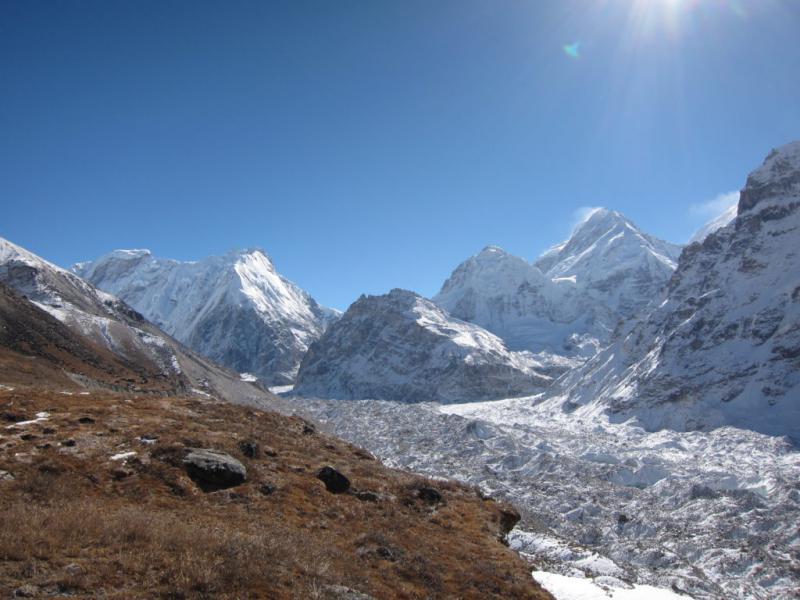
Dotted with spectacular valleys and the magnificent Kanchenjunga Glacier, this region is highly glaciated and cradles five major glacial systems in both Nepal and India. The trail to Kanchenjunga Base Camp Trek features contrasting landscapes, varying from subtropical lowlands to stunning glacial plateaus at high altitudes. The lowlands showcase verdant vegetation along with unique cultural settlements, while the higher altitudes reveal some of the most breathtaking mountain scenery in the world
This Kanchenjunga Base Camp Trek itinerary begins in the tropical lowlands, offering stunning rhododendron forests and beautiful villages in eastern Nepal, as well as the rich, diverse culture of the local community, where the Limbu, Rai, Gurung, Sherpa, and Tibetan Bhotia tribes are the major residents. The trail starts at 1,200 meters and ascends to 5,180 meters above sea level. The trek meanders through the Kanchenjunga Conservation Area, which is managed by local communities in association with WWF. This is a sparsely populated region of Nepal, home to endangered wildlife such as snow leopards, red pandas, Himalayan bears, clouded leopards, and Assam macaques. These species inhabit the pristine forests, alpine meadows, and wetlands of the area. This is a home stay designed trek, providing an opportunity to experience diverse cultures, traditions, and incredible views of towering mountains.
Highlights of the Kanchenjunga Base Camp Trek
- The trek offers breathtaking views of Mount Kanchenjunga and its surrounding peaks, including Mount Jannu, Kabru, and Yalung Kang.
- The region is far less visited compared to the more popular trekking areas in Nepal, offering a sense of solitude and peace.
- The trail passes through traditional villages inhabited by the Limbu, Sherpa, Rai, and Tibetan communities, allowing trekkers to experience their unique cultures, traditions, and hospitality.
- The trek takes you through diverse landscapes, from lush subtropical forests and rhododendron groves to alpine meadows and glacial moraine, providing a rich tapestry of Nepal's natural beauty.
- The journey takes place in the Kanchenjunga Conservation Area, home to a diverse array of wildlife, including the elusive snow leopard, red panda, and various bird species.
- The trek can be extended to visit both the North Base Camp (Pangpema) and the South Base Camp (Oktang), offering different perspectives of the Kanchenjunga massif.
Kanchenjunga North South Base Camp Trek Roure
The Kanchenjunga Base Camp Trekking Route takes trekkers through remote and stunning landscapes in eastern Nepal, offering access to both the North and South Base Camps of Mount Kanchenjunga, the third-highest mountain in the world. This Kanchenjunga Base Camp Trek itinerary begins in the tropical lowlands, showcasing stunning rhododendron forests and beautiful villages of eastern Nepal, as well as the rich, diverse culture of the local communities, including the Limbu, Rai, Gurung, Sherpa, and Tibetan Bhotia tribes.
The trail starts from Taplejung, which can be reached either by a flight to Suketar followed by a 2-hour trek, or by a 10-hour drive from Kathmandu to Birtamod, and then a 9-10 hour drive to Taplejung. From Taplejung, the trek leads through remote areas like Chiruwa, Amjilosa, and Gyabla, where you can explore the unique Kirati culture. Hiking to Ghunsa Village along the Ghunsa River is particularly charming, as it offers a glimpse into Sherpa culture and lifestyle before heading on to Khambachen for the Kanchenjunga North Base Camp.
After spending an incredible time at North Kanchenjunga Base Camp, the journey continues back to Ghunsa. From there, a different trail leads to the South Kanchenjunga Base Camp, crossing the Selele La Pass (4,290 m), Sinion La Pass (4,440 m), and Mirgin La Pass (4,480 m) to reach Ramche, followed by a day hike to Oktang and South Kanchenjunga Base Camp. After exploring the stunning South Kanchenjunga Base Camp, the trek concludes by returning to Taplejung through Trongden and Khesewa.
Hire a Experience Guide for Kanchenjunga Trek
A guide is mandatory for the Kanchenjunga trek due to government regulations. Hiring an experienced trekking guide is essential because of the trek's length and the remoteness of the route. The trek involves navigating through dense forests, alpine terrain at higher elevations, and challenging sections around Kanchenjunga North and South Base Camps, as well as the Selela Pass.
Finding the right path is not only mentally challenging, but there are also several sections over 4,000 meters that require an experienced guide to ensure the correct direction, especially with the presence of snow and the need for basic knowledge about altitude sickness. These factors make the journey even more demanding. An experienced guide is essential for helping you stay on track and manage the trek safely at every step. They will be invaluable in ensuring you reach your destination successfully, assisting with navigation, and providing support throughout the trek, reducing unnecessary stress.
Besides the challenges of route navigation, the Kanchenjunga Base Camp Trek offers a diverse experience of both nature and culture. Your guide will explain the local culture and natural surroundings, facilitate interactions with local communities, and ensure a stress-free journey. Additionally, the guide will manage accommodations, food, transportation, and permits throughout the trip, providing assistance in any situation. Our team of well-experienced and professional guides is dedicated to making your trek comfortable and stress-free, with full responsibility, care, honesty, and kindness.
Kanchenjunga Base Camp Group Join Trek
The Kanchenjunga region is a restricted area for single trekkers, requiring a minimum of two trekkers to embark on the Kanchenjunga North South Base Camp. For solo trekkers who want to visit the Kanchenjunga region, the Kanchenjunga Base Camp Group Join Trek is a fantastic option. It allows solo travelers to experience one of Nepal's most scenic and culturally rich treks while sharing the adventure with like-minded individuals. Joining a group trek offers the benefits of shared costs, cultural exchange, and the opportunity to make new friends, all while exploring the remote and stunning Kanchenjunga region. We offer many fixed departure dates for the Kanchenjunga North South Base Camp Trek, specifically designed to accommodate single trekkers at a reasonable cost with groups.
Walk Safely during the Kanchenjunga Base Camp Trek
Safety is crucial while trekking in the Himalayan region and the same applies to the Kanchenjunga North South Base Camp Trek. Always walk cautiously and carefully along the trail. The trails in the Himalayas can be slippery and rocky, especially during rain or snow time. This is particularly true at the end of May, the beginning of September, and during the winter months of December, January, and February. In higher elevations on the Kanchenjunga north Base Camp, Sele La Pass and Kanchenjunga South Base Camp there might be snow and ice that can make the trails even more challenging. Melting snow can cause paths to become slippery and muddy, so take extra care when walking near cliffs and pass.
During the main trekking season, the trails will be more crowded with trekkers, guides, porters, yaks, domestic animals and donkeys. At times, you may need to stand on the safe side of the trail and wait when crossing bridges or navigating narrow spaces. Additionally, be cautious of wild animals, domestic animals and yaks, as they may graze above the trail, which can sometimes cause stones to fall. Always stay alert in such areas—avoid stopping and keep moving if you're below them.
It’s also important to stay away from riversides, streams, avalanche-prone areas, rock fall zones, glacier regions, and areas near waterfalls, as these can pose additional hazards. By following these safety tips, you’ll ensure a safer trek. Your guide will also brief you on these precautions every day during the Kanchenjunga North South Base Camp Trek.
Preparation for Kanchenjunga Base Camp Trek
Preparation is essential for trekking and climbing in the Nepal Himalayas, including the Kanchenjunga North South Base Camp Trek. The 22-day itinerary, from your arrival to your departure from Nepal, requires proper planning to ensure safety, enhance your travel experience, and make the trek more enjoyable. With thorough preparation, you can reduce any difficulties and fully immerse yourself in the adventure, making the journey smoother and more fulfilling.
The journey of the Kanchenjunga Base Camp Trek is both challenging and rewarding due to its remote location and limited information about the route. It takes you through farmlands, Sherpa and Rai (Kirat) villages, terraced landscapes, diverse terrain, narrow trails, forests, rocky or muddy paths, and high-altitude areas. The trek involves numerous ascents and descents, with 5 to 8 hours of walking each day. Therefore, careful physical preparation, mental resilience, and determination are crucial for success.
Proper preparation for the Kanchenjunga Base Camp Trek also includes booking your trip with an experienced and reput